Speech Therapy
Autism communication support without trying to change who the child is
Neurodiversity-affirming therapy for communication, AAC, joint attention, and language growth with caregiver coaching at the centre.
Sessions from ₹800 • Free 10-min triage • No waitlists
Signs this applies
What you'll gain
How care works
Start this week
Understand what's happening before you commit to anything.
A free 10-minute WhatsApp call tells you exactly what the concern is, what care looks like, and what happens next. No obligation.
Common questions
Questions families ask us first.
Do you support AAC?
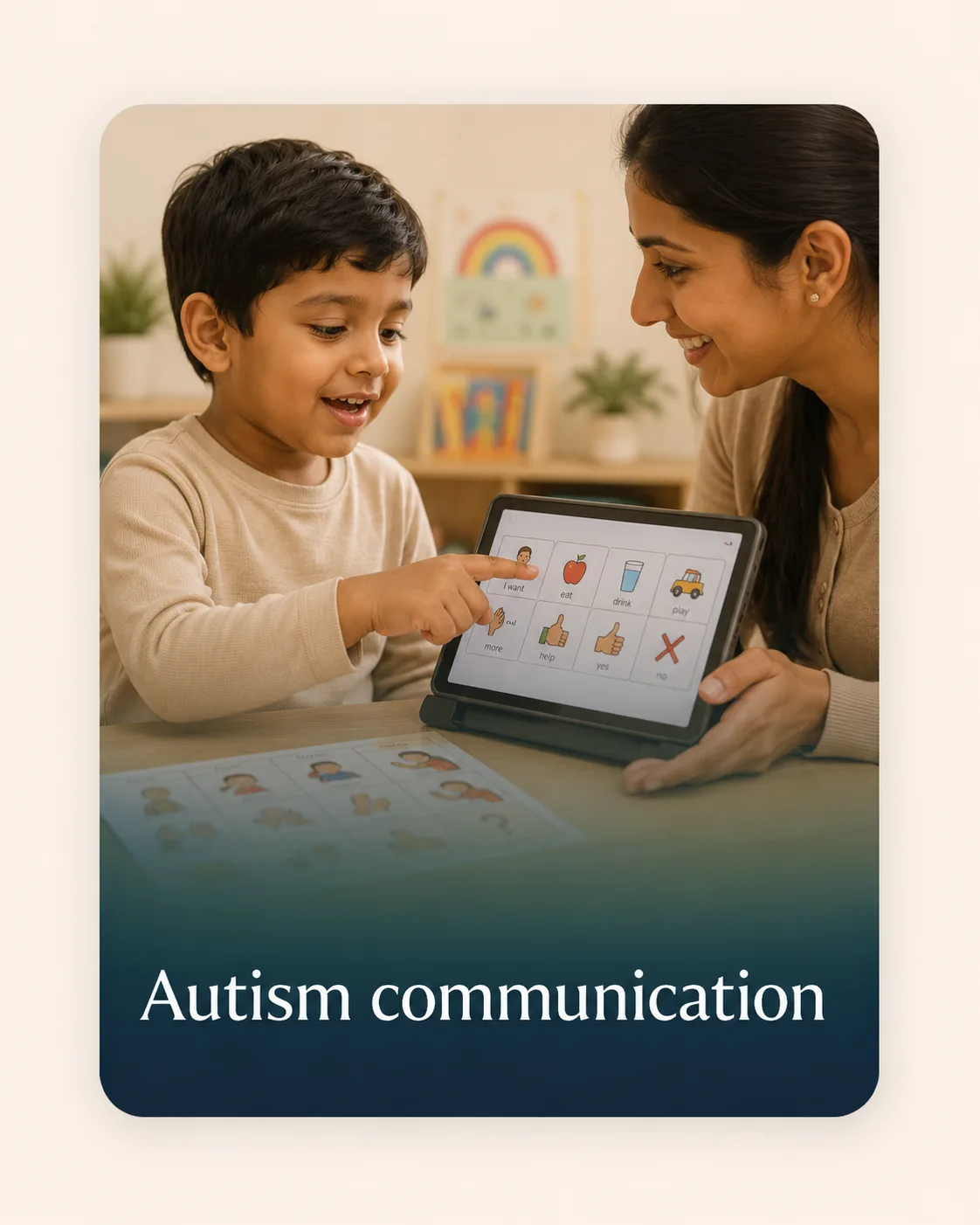
Yes. AAC, visual supports, and parent-mediated communication systems are part of the plan when clinically appropriate.
Do you take an ABA approach?
No. We follow a neurodiversity-affirming, child-led approach that prioritises the child's communication rather than normalisation.
Do you work with non-speaking children?
Yes. We support non-speaking and minimally verbal children through AAC assessment, device trialling, PECS, and parent-mediated strategies — the goal is always functional communication, not verbal speech as the only outcome.
How long does progress take for autism communication therapy?
Most families notice a concrete first change — a new communication attempt, reduced frustration, a new AAC symbol used spontaneously — within 6–8 sessions. Longer-term gains build through consistent home carry-over alongside sessions.
My child has speech but it doesn't feel like real communication — is that autism?
Scripted or echoed speech, limited back-and-forth conversation, and missing joint attention are patterns worth assessing. We don't diagnose autism — we assess and support communication. A diagnostic clarification can run in parallel.