What a cochlear implant actually does — and doesn't do
A cochlear implant bypasses the damaged hair cells of the inner ear and directly stimulates the auditory nerve with electrical signals. For a child with profound hearing loss, it provides access to sound that hearing aids cannot. But the implant itself does not produce speech or language. It gives the brain a new, unfamiliar signal to learn from. The quality of rehabilitation that follows switch-on — the moment the device is activated — determines whether the child learns to make sense of that signal and turn it into speech and language understanding.
What is auditory-verbal therapy (AVT) and why it's essential
AVT (Auditory-Verbal Therapy) is the structured clinical approach to cochlear implant rehabilitation for children. It teaches the brain to process sound through the implant by systematically developing listening skills — from basic sound detection to speech discrimination to full conversational understanding. AVT is parent-centred: parents are trained to carry out specific listening and language activities at home during the thousands of waking hours that are not in therapy sessions. The core principle of AVT is that listening — not lip-reading or sign — is the primary channel through which language is developed, and therapy systematically strengthens that channel.
The critical post-activation window
The first 3–6 months after cochlear implant switch-on are the most important period in the rehabilitation journey. The brain is beginning to adapt to the new electrical signal — a process called auditory neural plasticity. Intensive, structured AVT during this period accelerates the rate at which the brain learns to interpret the signal. Families who begin structured AVT within the first 2–4 weeks of activation consistently show faster and better outcomes than those who delay. In India, post-implant rehabilitation is often not scheduled immediately after activation — families may wait weeks or months for a public system appointment. This delay has real developmental costs.
What AVT involves at different stages
In the first months post-activation: detection (does the child react to sound?), discrimination (can they tell sounds apart?), and identification (can they identify specific sounds or words?) form the foundation of the listening hierarchy. Over the next 1–2 years: sentence comprehension, following multi-step instructions, phone listening (no lip-reading), and narrative understanding build on that foundation. Parallel to listening: speech production therapy addresses the clarity and intelligibility of the child's speech as their listening improves. Progress is reviewed every 3–6 months and correlated with audiological mapping appointments.
Online AVT in India: accessing quality rehabilitation anywhere
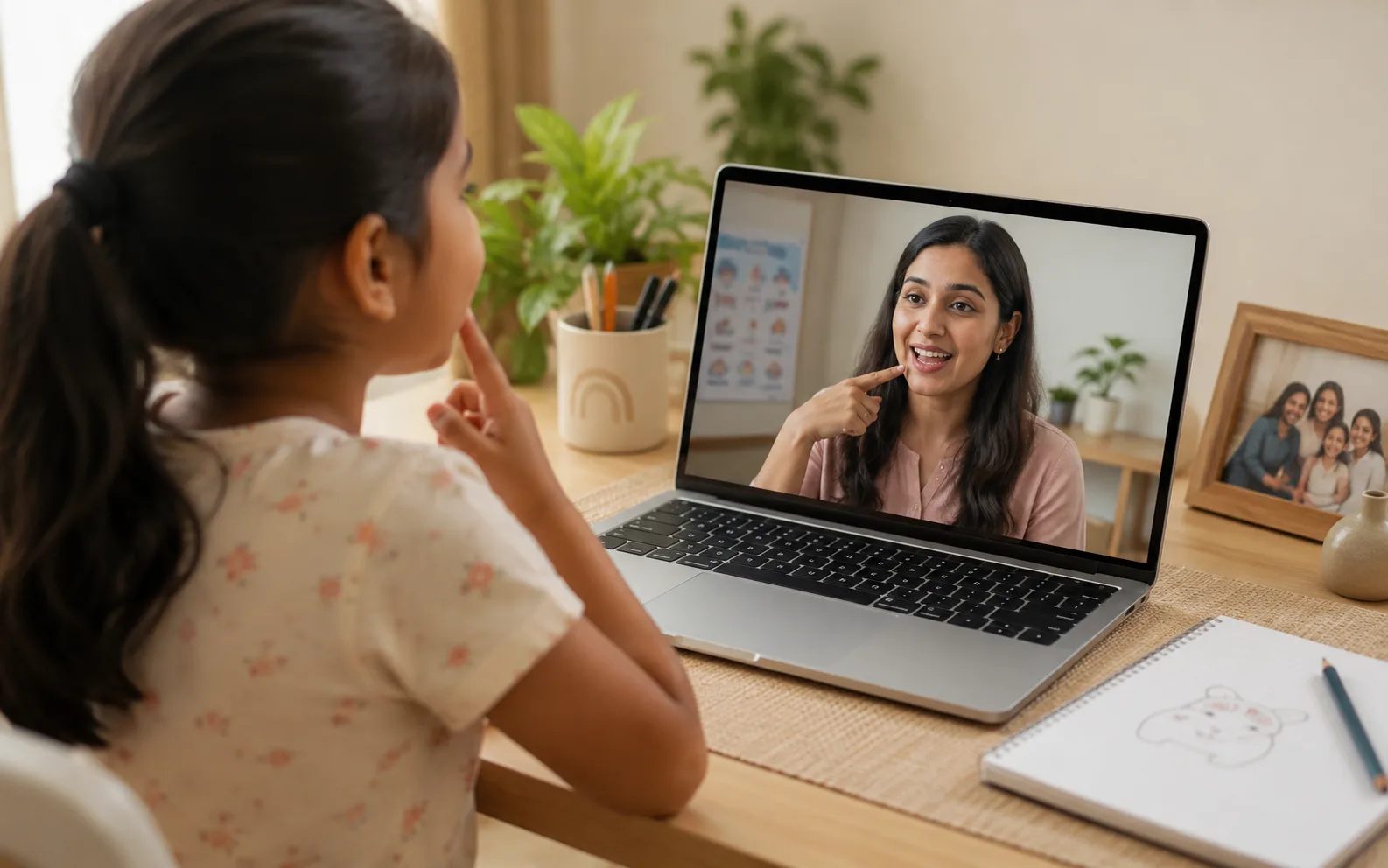
AVT is one of the speech and language specialisms that translates most effectively to the online format. Sessions are structured around parent-delivered activities at home — the therapist observes, coaches, and advances the programme remotely. This model means that families in cities without specialist AVT practitioners — which is most of India outside Chennai, Delhi, Bengaluru, and Mumbai — can access quality post-implant rehabilitation without relocation or long-distance travel. At Neurova, we provide structured online AVT in Tamil, Telugu, Malayalam, Kannada, Hindi, and English — making specialist care accessible regardless of geography.
Ready to take the next step?
Book a triage call about Cochlear rehab
Understand what the concern is and what good care looks like — before you commit to anything.
WhatsApp us — triageCommon questions
My child had their cochlear implant 6 months ago and hasn't started formal rehabilitation. Is it too late?
It's not too late — but start immediately. Every month without structured AVT is a missed opportunity in the post-implant plasticity window. Children who start structured rehabilitation late still make significant gains; they simply have more ground to cover.
How long does cochlear implant rehabilitation take?
Most children follow a 2–3 year intensive AVT programme with ongoing monitoring thereafter. Progress is highly individual and depends on age at implantation, residual hearing prior to surgery, consistency of AVT, and parent participation. Children implanted before age 2 with intensive AVT typically achieve spoken language outcomes close to hearing peers by school age.
Can my child use sign language and AVT at the same time?
Traditional AVT is strictly auditory-verbal and discourages sign use in order to maximise auditory attention. Some families choose a combined approach. The right decision depends on the family's goals, communication preferences, and the child's profile — and should be made with input from your AVT therapist and cochlear implant team.
What government support is available for cochlear implant rehabilitation in India?
AIIMS and government medical colleges provide cochlear implant surgery and some post-operative mapping through ADIP and state-funded programmes. Post-implant AVT is less consistently covered — and quality varies significantly. Private online AVT through providers like Neurova gives families consistent, specialist-led rehabilitation alongside government care.
Available across India
And online to every PIN code in India.
This article is for general information and does not replace an individual clinical assessment. Read our full medical disclaimer →