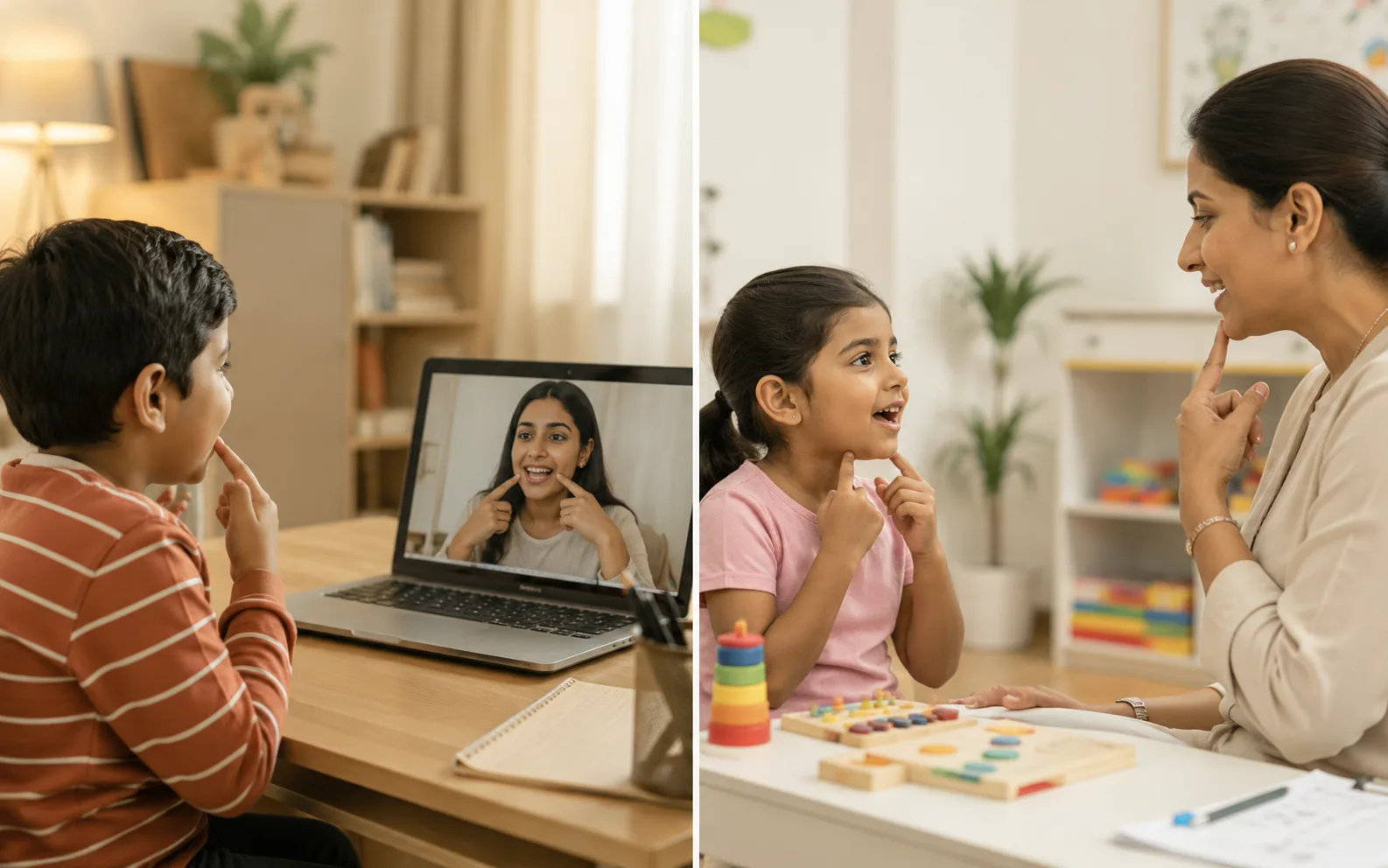
The short answer
For most speech, language, fluency, and neuro-rehab goals, online therapy produces outcomes equivalent to in-person therapy. The research on this has been consistent since 2010 and has strengthened significantly since 2020. For some very specific assessment tasks (oro-motor examination, certain audiometric tests) in-person attendance is still needed — but those are a minority of situations.
What works well online
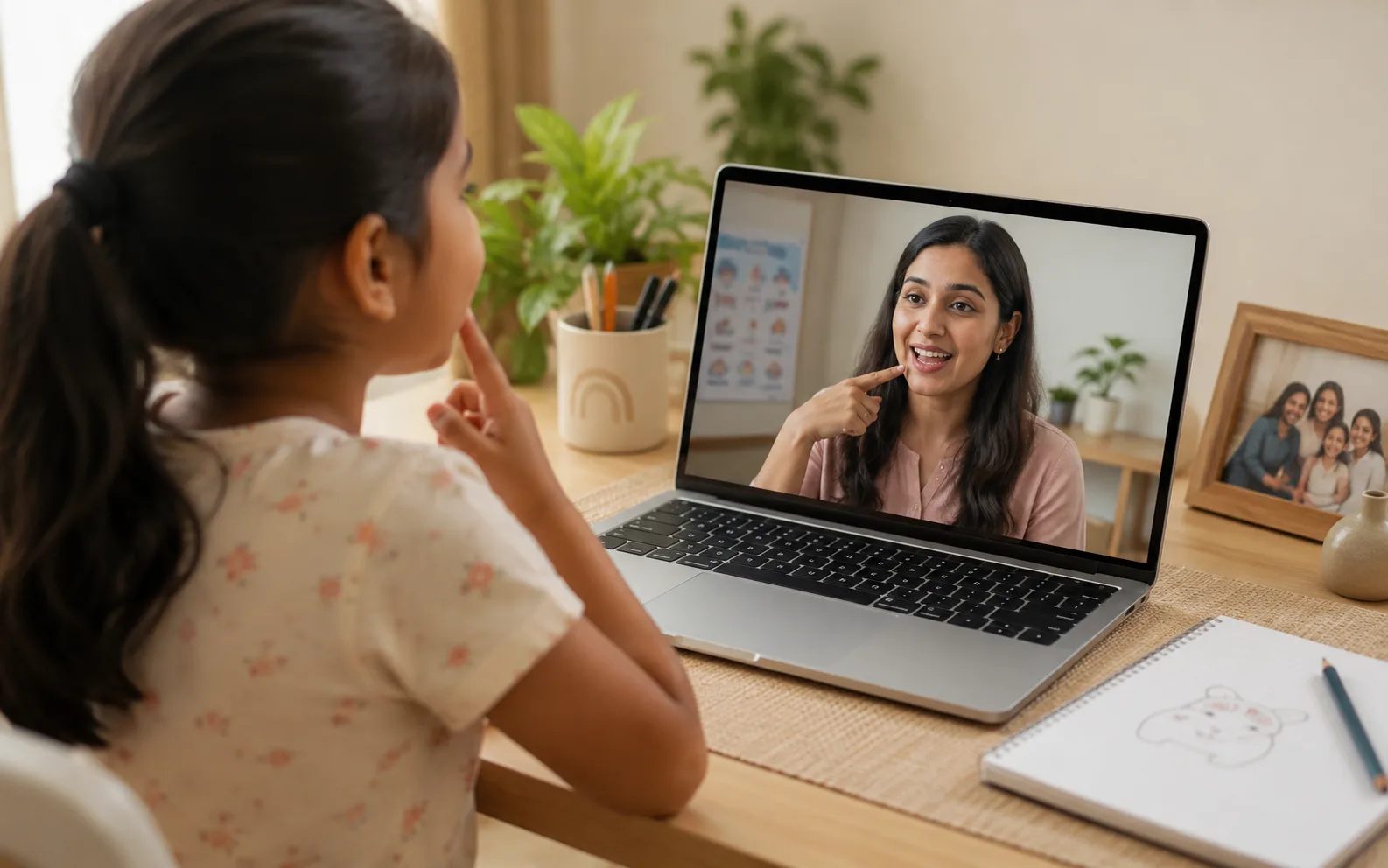
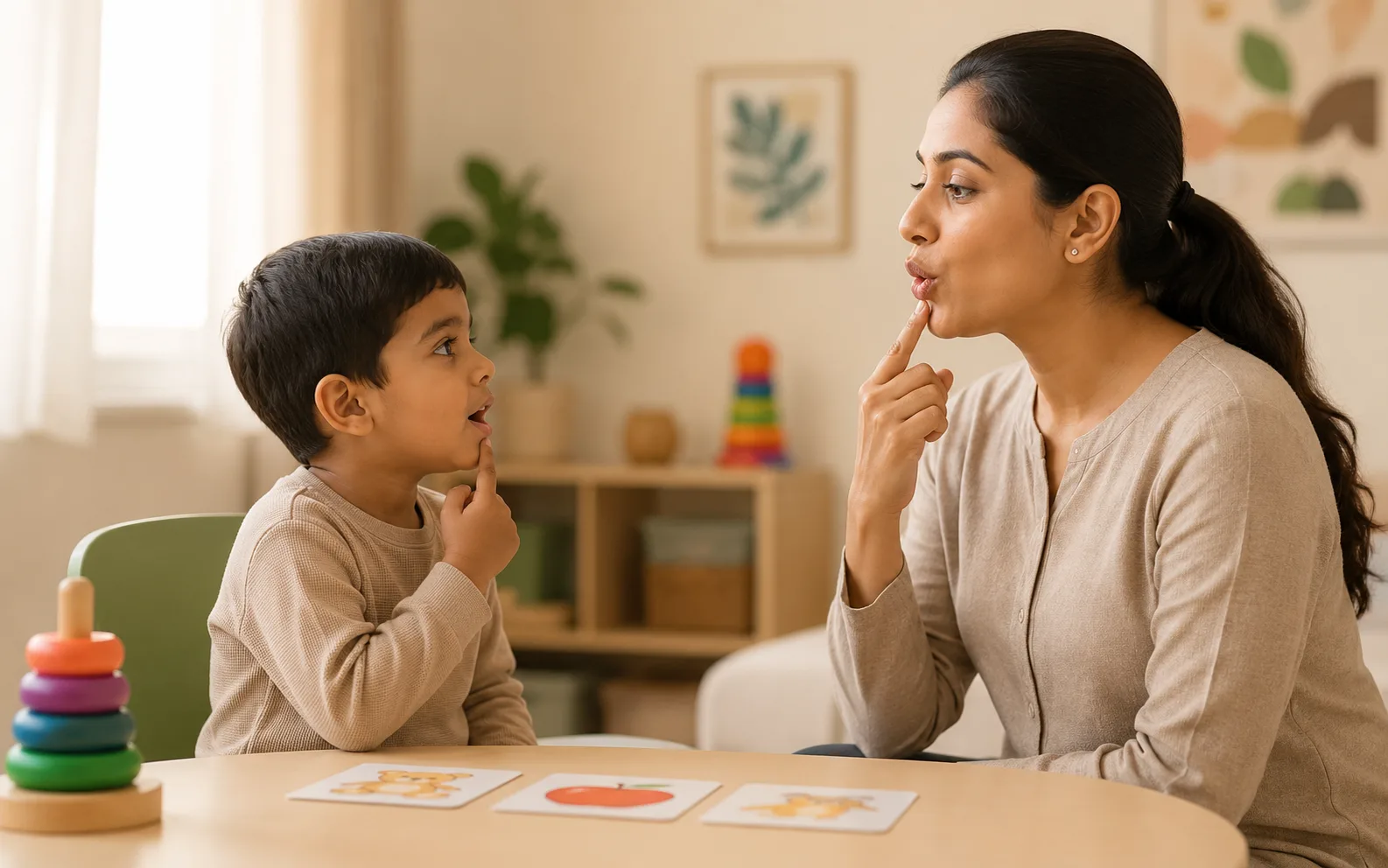
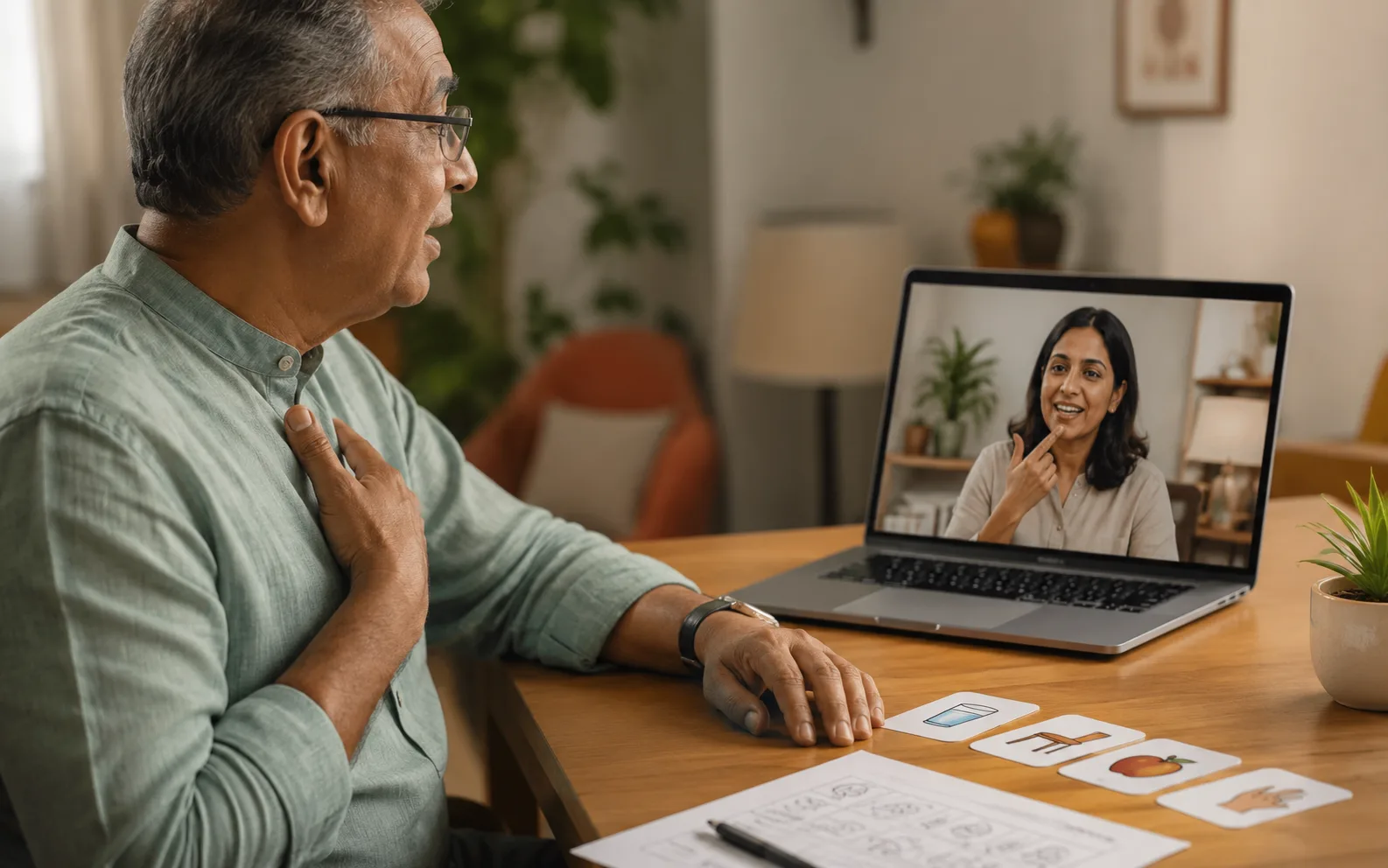
Language therapy for children — teaching new vocabulary, expanding sentence length, building conversation skills — works very well online because the medium is interaction, which a screen can facilitate. Fluency therapy (stammering) is often more effective online because it can incorporate practice of real-world speaking situations: phone calls, video meetings. Aphasia therapy works online — the exercises are language-based and can be conducted entirely through a screen. AAC (augmentative and alternative communication) support works online. Tinnitus counselling and hearing guidance work online.
What genuinely requires in-person attendance
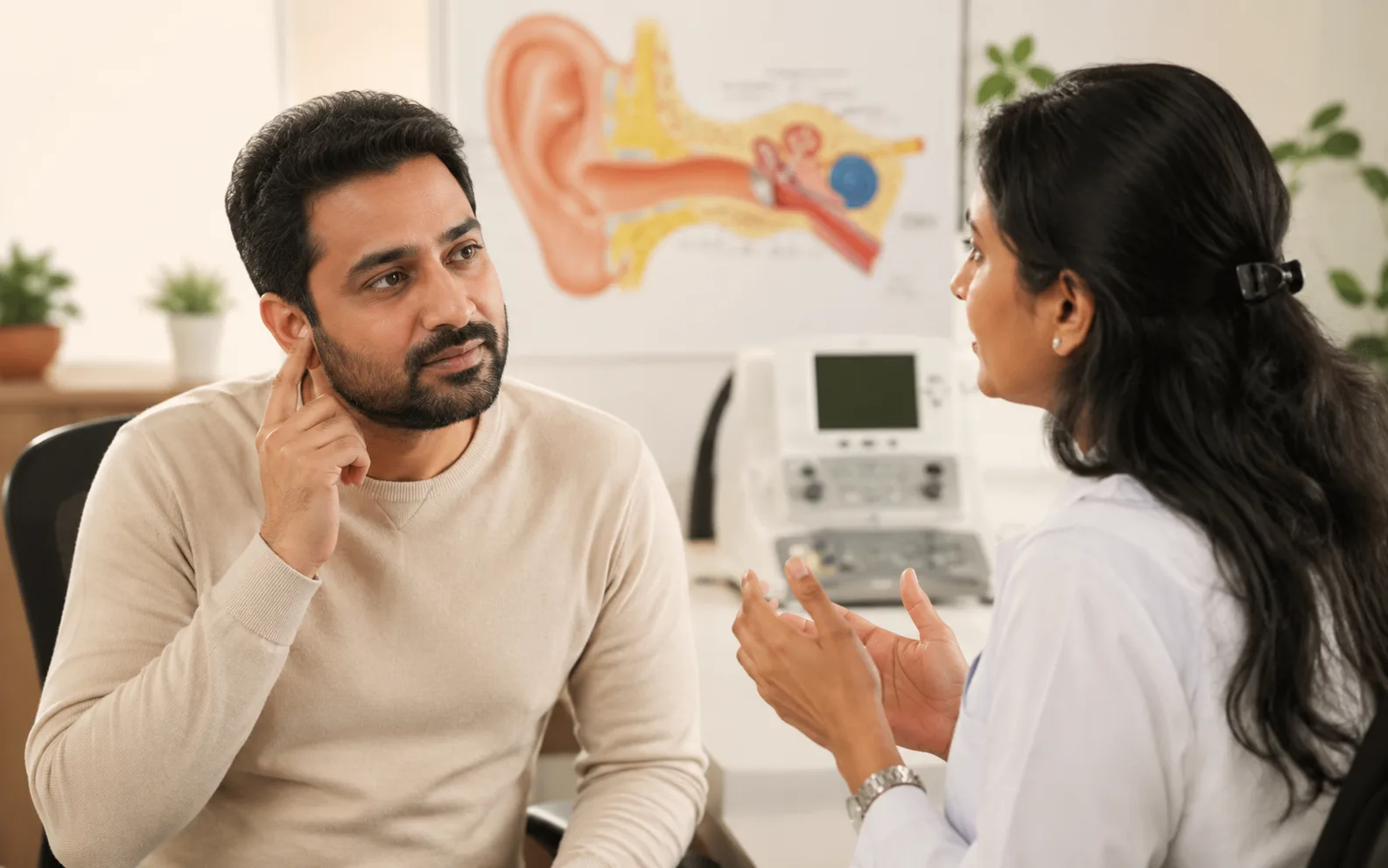
Formal audiometric hearing testing (audiograms) requires specialist equipment and must be done in a sound-treated booth. Oro-motor assessment for feeding therapy in infants usually needs hands-on examination. Some cochlear implant mapping (device programming) must happen at the implant centre. Beyond these specific situations, most speech and hearing care can be delivered online without compromise.
The practical benefits of online
Zero commute time means more energy for the session itself — particularly important for children who are tired after school, or adults recovering from stroke. Same-week start is consistently achievable online; clinic waitlists in major Indian cities can run 3–6 months. Sessions can happen at home, which is where the child actually practices language — reducing the generalisation gap between clinic learning and real-world use.
How to decide
If your concern is a speech, language, fluency, or communication goal: start online, escalate in-person only if the therapist recommends it after assessment. If your concern is audiometric (you need a hearing test, cochlear mapping, or hearing aid fitting): coordinate with a local audiology clinic for the diagnostic piece, then manage rehab and follow-up online.
Ready to take the next step?
Book a triage call about Online speech therapy
Understand what the concern is and what good care looks like — before you commit to anything.
WhatsApp us — triageCommon questions
Is online speech therapy recognised by schools and hospitals?
Yes. Reports from RCI-registered therapists are recognised regardless of whether sessions were online or in-person. The registration is what matters, not the delivery medium.
What technology do we need for online sessions?
A stable internet connection, a phone or laptop with a working camera and microphone, and a reasonably quiet space. Most sessions work well on a standard home broadband connection.
Available across India
And online to every PIN code in India.
This article is for general information and does not replace an individual clinical assessment. Read our full medical disclaimer →