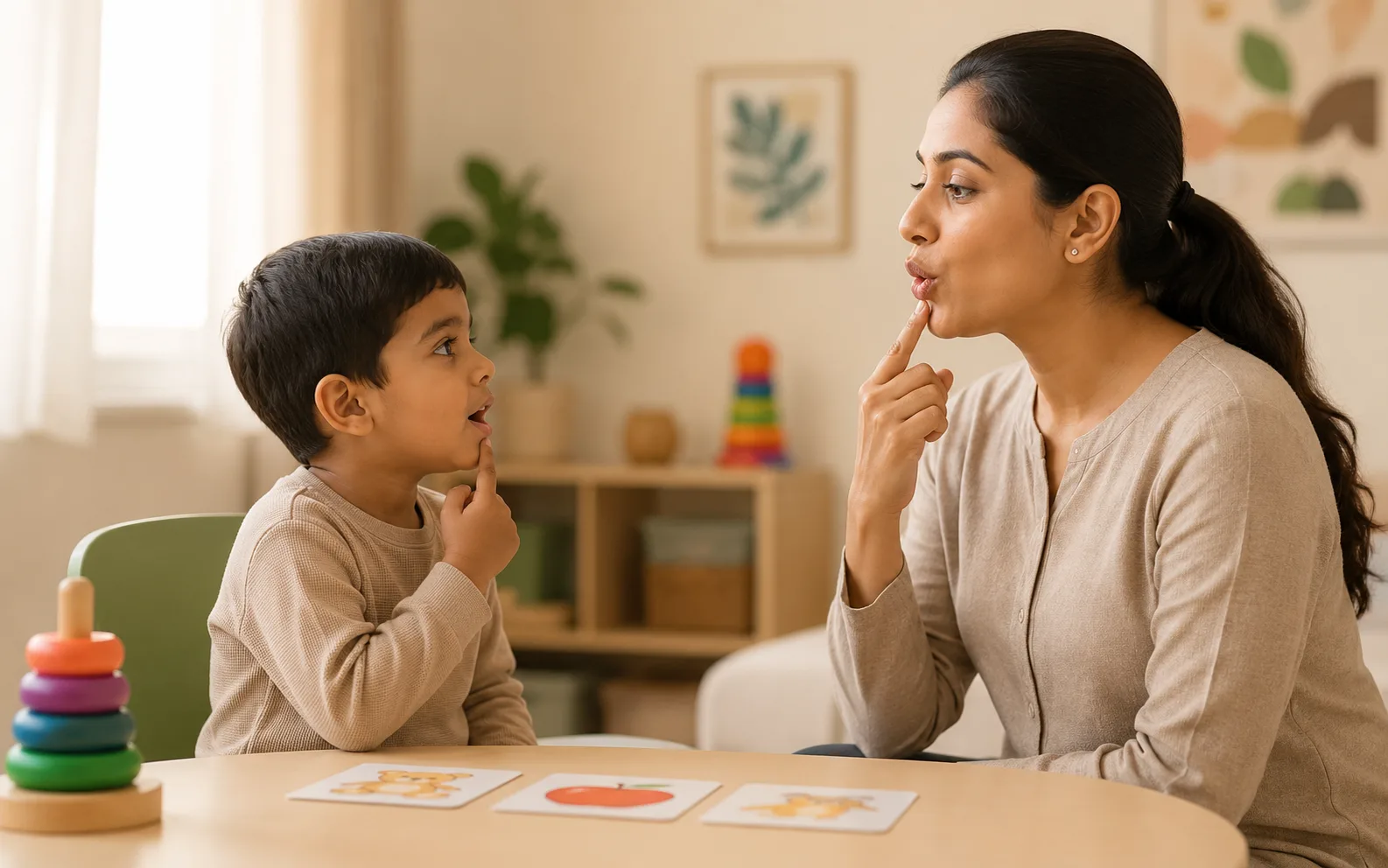
Communication in autism: what's actually happening
Autistic children have a wide range of communication profiles. Some are verbal but struggle with back-and-forth conversation, understanding non-literal language, or regulating the sensory experience of communication. Others use limited words or are minimally verbal — relying on gesture, sound, or behaviour to communicate needs. And some are non-speaking. In all cases, the communication difference in autism is not about intelligence or potential. It's about the way the brain processes and produces language — and speech therapy, when appropriately tailored, can significantly expand a child's ability to connect with the world.
The difference between traditional and neurodiversity-affirming approaches
Traditional speech therapy for autism in India has often been compliance-based: structured drills, discrete trial training, and a heavy emphasis on producing speech sounds correctly. Neurodiversity-affirming therapy takes a different approach. It prioritises the child's communication as it is — supporting and expanding it rather than replacing it. This means following the child's interests, using natural play-based activities, and treating non-verbal communication as valid and valuable. The goal is not to make the child communicate 'normally' — it's to reduce frustration, increase connection, and support development on the child's own terms.
What is AAC and who does it help?
AAC — Augmentative and Alternative Communication — is any method that supplements or replaces verbal speech. This includes: picture exchange systems (PECS), communication boards, and speech-generating devices (SGDs) like apps such as Proloquo2Go or Snap + Core First. AAC is not a last resort for children who can't speak. It's a communication system that reduces frustration, supports language development, and — counterintuitively — is associated with increases in verbal speech over time. A common fear among Indian families is that giving a child AAC will stop them from trying to talk. Research consistently shows the opposite: AAC supports verbal language, not suppresses it.
How speech therapy for autism is delivered online
Online autism communication therapy works differently from in-person sessions — but it can be equally or more effective for many children. Sessions typically involve the parent carrying out activities with the child at home while the therapist observes and coaches in real-time. Between sessions, the therapist coaches the family via WhatsApp on how to extend language learning into daily routines — bath time, mealtimes, play. This parent-mediated model is particularly well-suited to young children who are unlikely to engage with a screen-based session directly, and it gives families practical strategies they can use every day rather than just in sessions.
What to look for in a speech therapist for autism in India
Look for an RCI-registered SLP with specific experience in autism communication and AAC. Ask whether they follow a neurodiversity-affirming approach. A good autism communication therapist will: conduct a communication profile assessment (not just a speech sound evaluation), involve the family as core participants in the therapy process, have a plan for AAC if verbal communication is not yet functional, and set goals around meaningful communication — not just speech production. In India, the quality of autism communication therapy varies widely. RCI registration is a minimum; specialist experience with AAC and a neurodiversity-affirming philosophy are what differentiate good from poor care.
Ready to take the next step?
Book a triage call about Autism communication
Understand what the concern is and what good care looks like — before you commit to anything.
WhatsApp us — triageCommon questions
My child has autism and doesn't speak. Can therapy still help?
Yes. Non-speaking and minimally verbal autistic children consistently benefit from structured AAC therapy and parent-mediated communication support. The goal is always to expand their ability to communicate — through whatever modality works best for them.
At what age should autism communication therapy start?
As early as possible — ideally before age 3. Early intervention during the critical language development window produces the best outcomes. But starting therapy at any age is better than not starting.
Will AAC prevent my child from learning to speak?
No. This is one of the most common misconceptions. Research consistently shows that AAC use is associated with increased verbal speech over time, not decreased. Giving a child more ways to communicate reduces frustration and creates more opportunities for language learning.
What is ABA therapy and is it different from speech therapy?
ABA (Applied Behaviour Analysis) is a behavioural intervention approach; speech therapy is a communication-focused clinical discipline. They are different. At Neurova, we follow neurodiversity-affirming speech and language approaches, not ABA. We believe in supporting the child's communication as they are, not reshaping them to fit neurotypical norms.
Available across India
And online to every PIN code in India.
This article is for general information and does not replace an individual clinical assessment. Read our full medical disclaimer →