Why what happens between sessions matters more than sessions alone
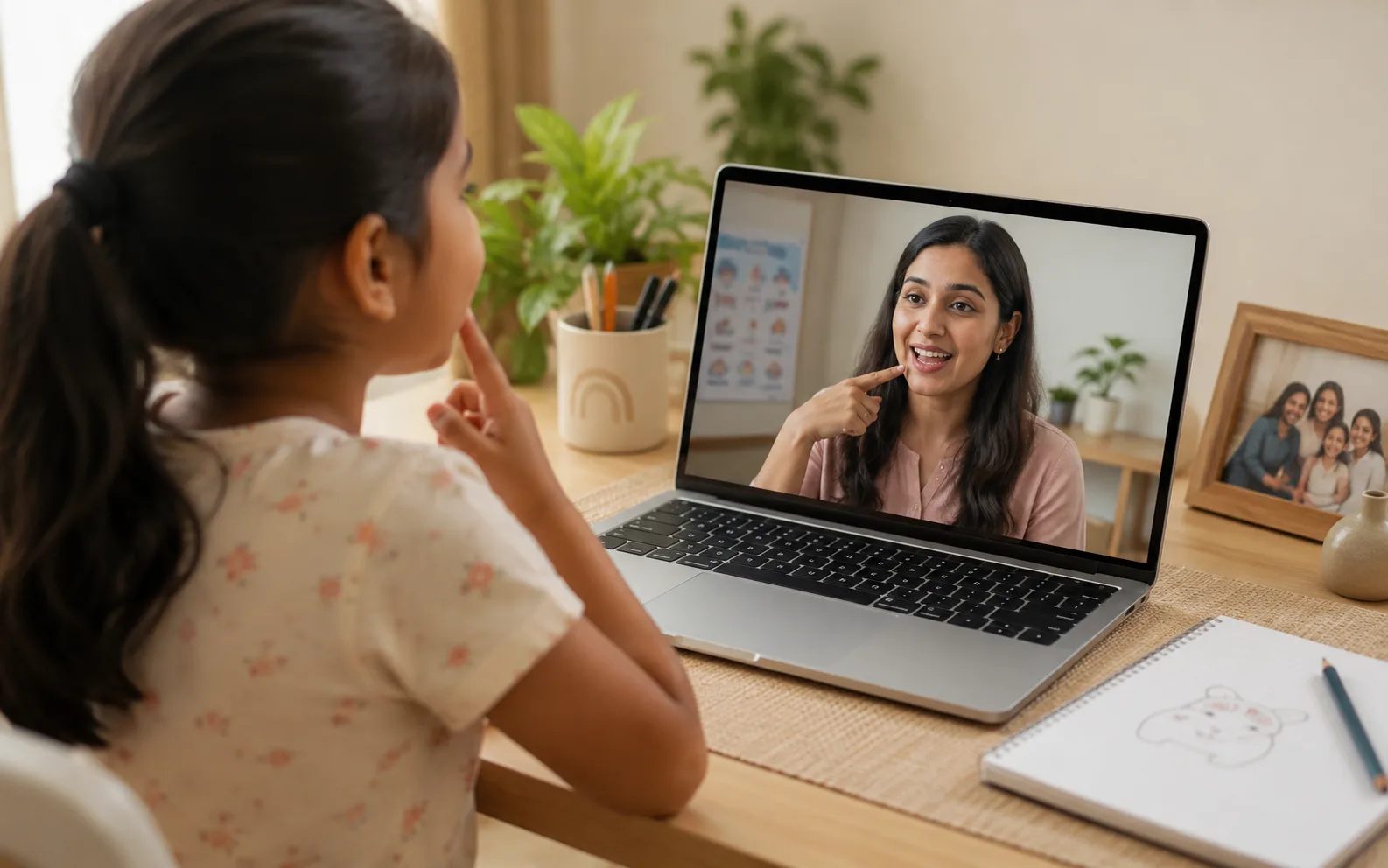
An hour of speech therapy per week amounts to roughly 50 hours per year. A child is awake for approximately 6,000 hours a year. The ratio makes clear where language learning actually happens: in daily life, not in the therapy session. Research consistently shows that parent-mediated practice between sessions is the strongest predictor of therapy outcomes. A therapist who tells you 'just bring them to sessions' is missing half the intervention. A good therapist trains parents to be the primary agents of change — with sessions as the teaching and calibration point, and home as the practice space.
Language expansion in everyday routines
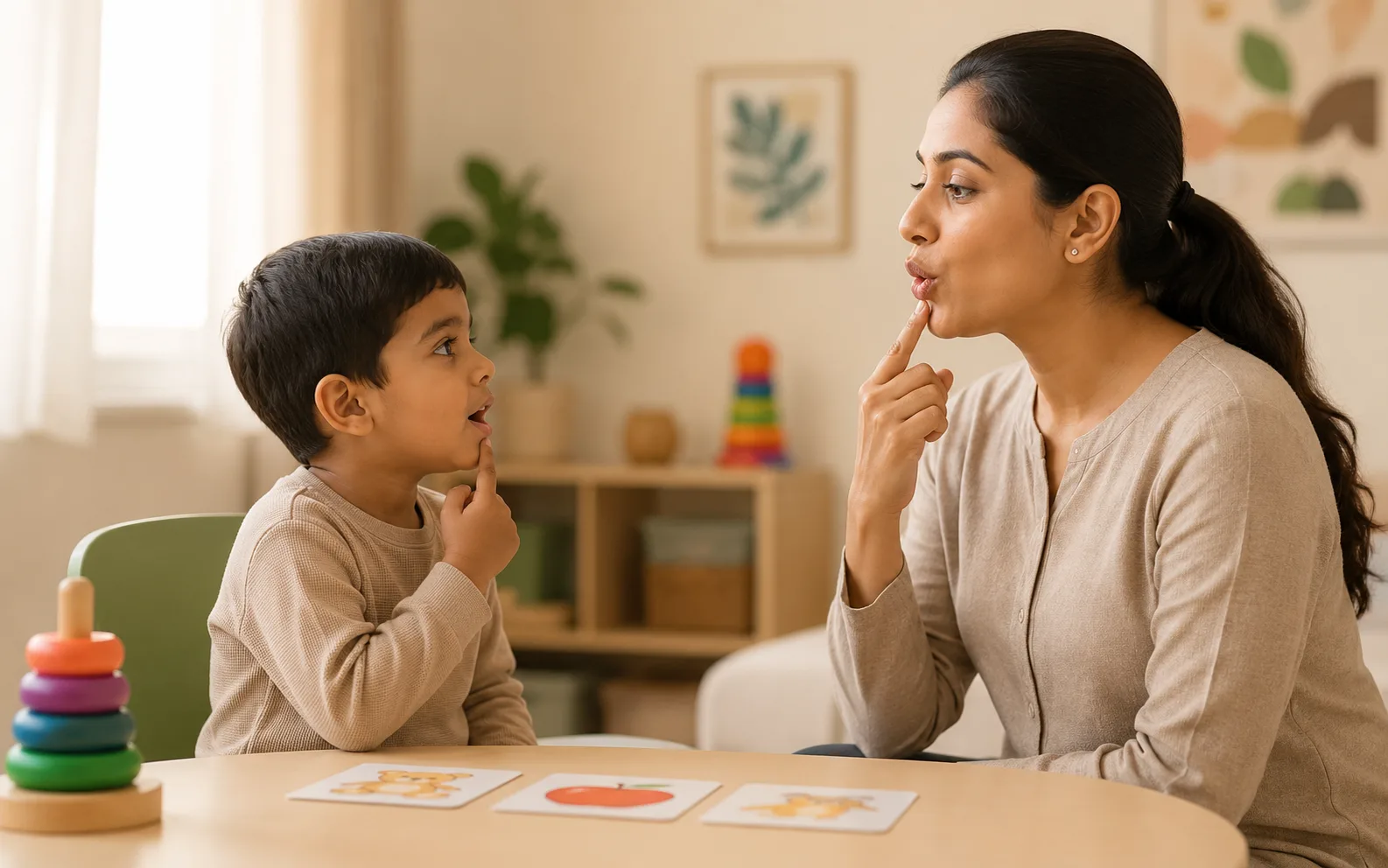
The most powerful language intervention is not structured activity — it's expanding language during routines the child is already part of. At mealtimes: narrate what you're doing ('I'm cutting the mango / now we pour the water / the rice is hot'). During bath time: name body parts, describe the sensations, give simple two-step instructions. During play: follow the child's lead — they choose the activity, you narrate and expand. If your child says 'ba', you say 'yes, ball — big ball — roll the ball'. The key technique is called 'expansions and extensions': repeat back what the child says with a slight addition that models the next developmental step.
Reading aloud: the single highest-impact language activity
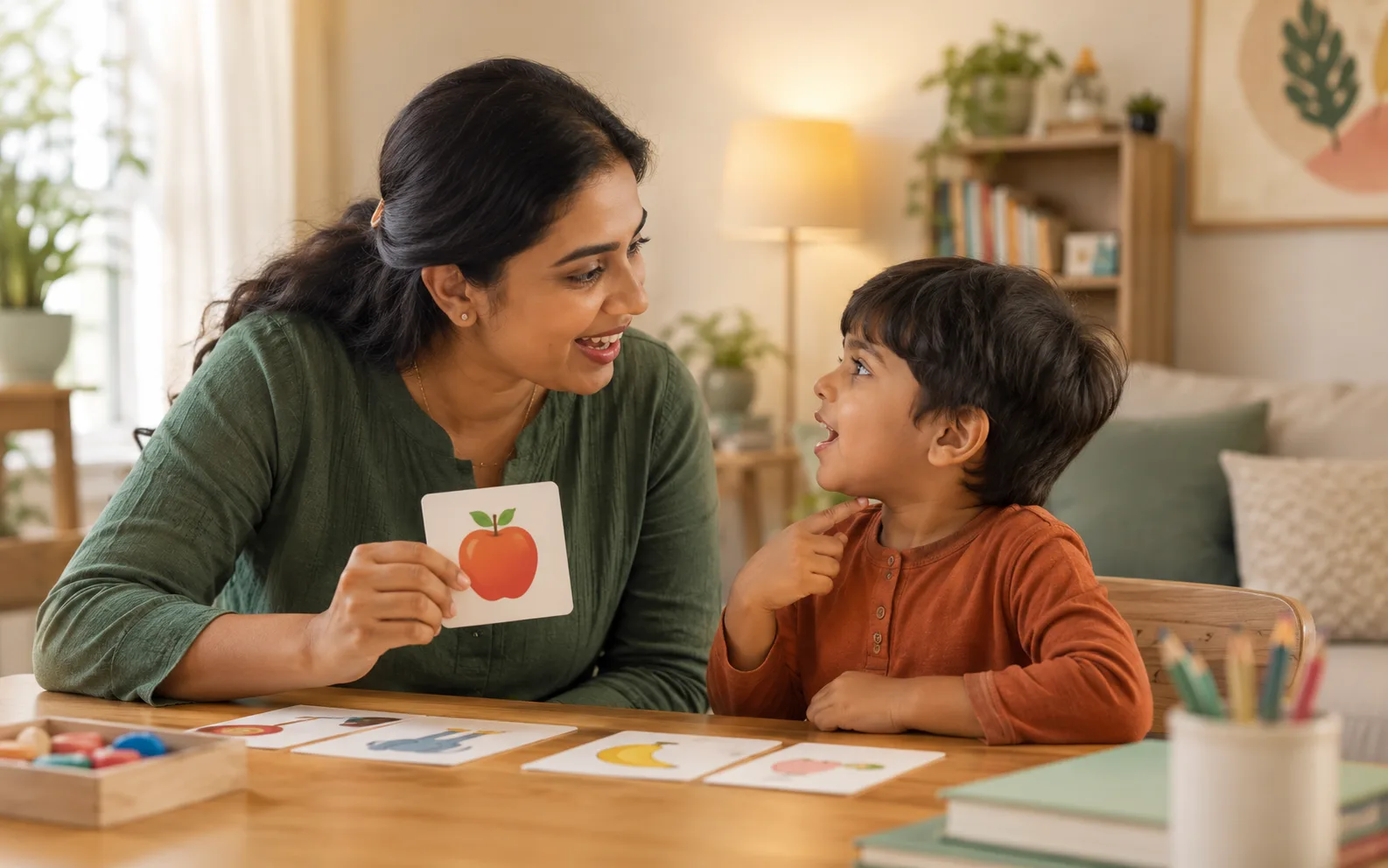
Daily picture book reading is the most evidence-supported home activity for speech and language development at any age. For young children: point to pictures and name them, pause before turning the page, let the child 'read' with you by finishing repeated phrases. Choose books with simple, repetitive text (Brown Bear, Eric Carle books) for children under 3. For older children: ask 'what do you think will happen next' questions, discuss the pictures before reading the words, retell stories together. In multilingual Indian families, reading in the home language is at least as valuable as reading in English — language strength in the first language transfers to additional languages.
Turn-taking and conversation practice
Back-and-forth communication — not just vocabulary — is the foundation of language development. For very young children: take turns with sounds, faces, and simple vocalisations. Even peek-a-boo builds turn-taking, which is the foundation of conversation. For toddlers: use daily choices to create communication opportunities. Instead of getting the juice automatically, hold the cup up and wait. Pause and expect a communication attempt — a word, a point, a look — before responding. For school-age children: family mealtimes with conversation (not screens) are consistently associated with better language outcomes. Ask open-ended questions ('what happened at school today?' vs 'was school good?').
What to avoid — common mistakes that slow progress
Avoid correcting directly: if your child says 'boon' for 'spoon', model the correct form ('yes, spoon!') rather than 'no, say spoon'. Direct correction creates anxiety and reduces communication attempts. Avoid filling in every word: create space for the child to communicate. Pausing and waiting is a technique, not passivity. Avoid screen substitution for language input: screens are not equivalent to live language interaction. The back-and-forth, contingent nature of human conversation is what drives language development — screens don't provide this. Avoid over-asking questions: questions that require a specific answer put pressure on speech production. Commenting (narrating, expanding, describing) is more effective than interrogating.
Ready to take the next step?
Book a triage call about Speech delay
Understand what the concern is and what good care looks like — before you commit to anything.
WhatsApp us — triageCommon questions
How much time should I spend doing speech activities with my child each day?
Quality matters more than quantity. 20–30 minutes of intentional language-rich interaction per day — spread across daily routines — is more effective than a single structured 'speech activity' session. The goal is making language expansion a habit across your daily life with your child.
My child doesn't like structured activities. What should I do?
Follow your child's lead. The activities that produce the most language development are the ones the child chooses and is motivated by. Your role is to enrich and expand the language around whatever they're already doing — not to impose a structured task.
Should I use English or our home language for these activities?
Use your home language — the language you're most fluent and natural in. Children learn language best from caregivers who are communicating naturally, not reaching for words. Language strength in the first language supports acquisition of additional languages, not interferes with it.
Available across India
And online to every PIN code in India.
This article is for general information and does not replace an individual clinical assessment. Read our full medical disclaimer →